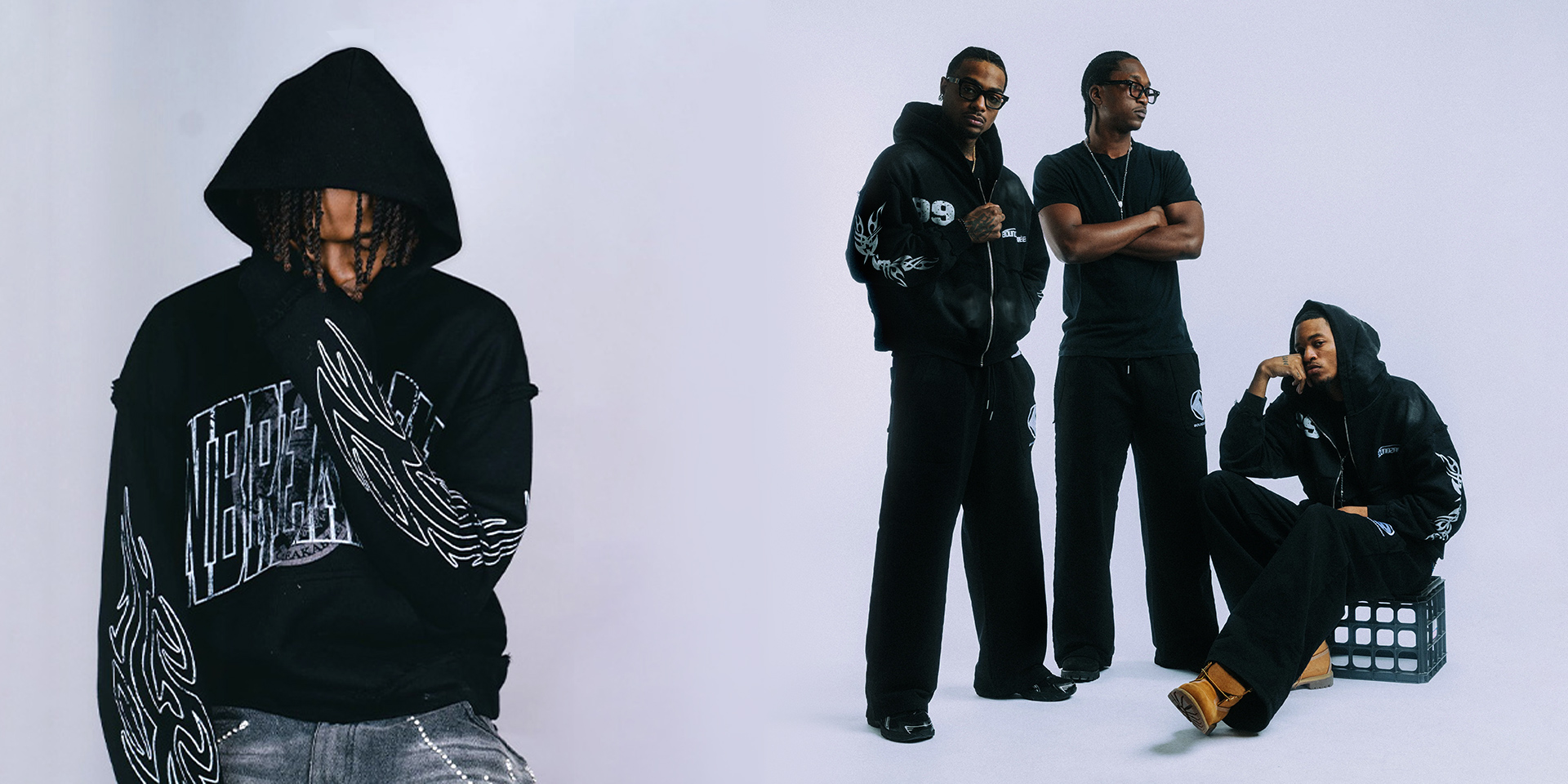
Why Dongguan Clothing Manufacturers Keep Showing Up on Serious Streetwear Sourcing Maps
Most sourcing problems do not appear when a factory says yes. They appear later, when the fabric has to shrink correctly, the wash has to stay stable, the graphic has to land in the right position, the rib has to recover after wear, and the delivery date still has to hold.
That is why established streetwear brands do not always search for the broadest possible “China clothing manufacturer” list. They search for specific manufacturing coordinates. Dongguan, especially the Humen area, keeps appearing in those searches because streetwear production is not one isolated operation. It is a chain of pattern decisions, fabric access, trims, cutting, sewing, washing, printing, embroidery, inspection, packing, and export timing.
For a basic garment, a generic production listing may be enough to start a conversation. For a heavyweight hoodie with acid wash, puff print, appliqué, custom drawcords, oversized proportions, and bulk delivery pressure, the question changes. The brand is no longer asking, “Who can make this?” The better question is, “Which production ecosystem can keep all these moving parts under control?”
Dongguan’s relevance comes from that supply-chain reality. Humen has hosted major fashion and apparel events, and public reporting has described Dongguan’s large textile and apparel base, including 12,000 textile and apparel manufacturing enterprises and more than 1,200 registered companies with industrial output above 90 billion yuan in 2023. More recently, the 2025 Global Fashion Conference in Humen brought together fashion and textile representatives from 25 countries and regions, showing that the area is still being positioned as a serious apparel hub rather than a fading production town.
Why do streetwear brands look at Dongguan instead of a generic China sourcing list?
Dongguan matters because streetwear production depends on supply-chain density, not just factory availability. Brands with proven sales need fabric, trims, pattern work, wash control, decoration testing, bulk sewing, inspection, and shipping to move as one system. Generic sourcing lists often show capacity, but they rarely show whether that capacity can hold complex streetwear execution.
A generic China sourcing search can produce thousands of names. The problem is that names do not explain process ownership. A company may say it can produce hoodies, tees, jackets, or denim, but the real test begins when the garment has streetwear-specific demands.
A boxy tee is not just a wider T-shirt. It needs shoulder slope, sleeve width, body length, collar shape, and fabric weight to work together. A washed hoodie is not just a hoodie put into a dye process. The fabric, thread, zipper tape, print layer, rib, and shrinkage tolerance all react differently after washing. A varsity jacket with embroidery, appliqué, and mixed materials requires coordination between pattern development, panel cutting, decoration order, lining, trims, and final pressing.
Dongguan is attractive to many streetwear teams because it sits inside a wider Pearl River Delta manufacturing environment where fabric mills, accessory markets, wash houses, print workshops, embroidery resources, cutting rooms, sewing teams, inspection services, and export logistics are relatively close to each other. Industry-cluster logic matters here. China’s industrial clusters are generally valued because geographic concentration allows related businesses to operate near one another, improving supply-chain responsiveness and integration.
For streetwear, this matters more than in many basic apparel categories. A brand may need to adjust print scale after the first sample. It may need to change rib quality because the first fabric collapses after wash. It may need a different zipper finish because the metal tone feels wrong against a vintage garment dye. If every correction requires a slow handoff to a distant subcontracted process, timelines stretch and quality decisions become harder to control.
Dongguan is not automatically the right answer for every apparel program. But for streetwear products where fabric, fit, wash, graphic placement, decoration, and bulk timing all matter, the region gives experienced product teams a denser operating field.
What makes Dongguan different when fabric, trims, wash, and decoration have to move together?
The difference is coordination load. Streetwear often combines heavyweight cotton, custom trims, enzyme or acid wash, screen print, embroidery, appliqué, distressing, and oversized fit engineering in one garment. Dongguan’s value is not one single technique; it is the ability to coordinate multiple processes without turning every stage into a separate sourcing problem.
A simple apparel order can move in a straight line: fabric, cut, sew, finish, inspect. Streetwear rarely behaves that cleanly.
Consider a heavyweight zip hoodie. The product team may want 420gsm French terry, a slightly cropped body, dropped shoulders, a double-layer hood, custom zipper pullers, faded garment wash, cracked screen print, and embroidery on the chest. Each decision affects another decision.
If the fabric is too dense, print penetration changes. If the wash is too aggressive, zipper tape may wave, rib may deform, and embroidery edges may pucker. If the hoodie body is oversized but the sleeve opening is not adjusted, the silhouette feels off in retail photos. If the print placement was approved on a sample but not locked with measurements before bulk cutting, the design can shift across sizes.
This is why product development teams often care less about one factory’s claim and more about the operating network behind it. They need to know who reviews the tech pack, who checks pattern feasibility, who confirms fabric shrinkage, who tests wash behavior, who approves decoration order, who monitors cutting accuracy, who inspects bulk goods, and who communicates when one process affects another.
A strong Dongguan clothing manufacturer for streetwear brands should be able to discuss:
Tech pack review before sampling Pattern development and grading logic for oversized, boxy, cropped, or baggy fits Fabric sourcing based on GSM, hand-feel, shrinkage, dye behavior, and decoration compatibility Sampling that reflects bulk-ready construction, not just showroom appeal Print, wash, embroidery, appliqué, and trim testing before production approval Pre-production sample approval with measurements, fabric standard, artwork placement, and finish references locked Bulk cutting with marker control and size-ratio accuracy Sewing line control for seam tolerance, rib attachment, zipper alignment, and panel balance Finishing, pressing, inspection, packing, carton labeling, and shipping documentation
This chain is where Dongguan’s appeal becomes practical. The region is not searched only because it is in China. It is searched because many streetwear programs need a cluster where corrections can happen quickly and where factories are used to product categories that require more than basic sewing.
Where do generic China apparel listings often fail streetwear teams?
Generic listings often fail because they treat streetwear as a category name instead of a production system. A factory may produce T-shirts or hoodies, but still struggle with wash stability, graphic placement, trim matching, silhouette balance, fabric hand-feel, shrinkage control, or sample-to-bulk alignment once the order moves into real production.
The most common mistake is assuming that a good sample proves bulk readiness. It does not.
A sample can be made with extra attention, special handling, hand-selected fabric, and a slower process. Bulk production is different. The factory has to repeat the approved result across size ratios, fabric lots, multiple sewing operators, wash batches, decoration runs, and final inspections.
This is where weaker streetwear production systems show cracks.
The graphic that looked centered on one sample may drift across sizes because artwork placement was not translated into graded production measurements. The acid wash that looked perfect on one hoodie may become too cloudy, too harsh, or uneven across batches. The oversized fit may collapse because the shoulder drop was copied without balancing sleeve opening and body width. The rib may lose recovery after washing. The drawcord may be replaced with a similar-looking trim that changes the perceived quality. The bulk fabric may feel drier or lighter than the approved sample because the fabric standard was not properly locked.
These are not small issues for streetwear brands with proven sales. Their customers notice when the product does not feel like the campaign image. They may not use technical terms, but they can feel when a hoodie hangs wrong, when a washed tee looks flat, when embroidery puckers, or when a heavyweight garment does not have the right hand.
Generic sourcing platforms are useful for discovery, but they do not always reveal whether a manufacturer can control this kind of drift. Streetwear teams need evidence. That means asking for production records, wash test history, size-set samples, fabric lot standards, decoration test panels, pre-production approval systems, and inspection checkpoints.
A Dongguan factory that truly understands streetwear should be comfortable discussing these points before the brand commits a full program. If the conversation stays only at product type, unit price, and delivery date, the sourcing team is not yet seeing the production reality.
How does Dongguan’s regional supply-chain density affect sample-to-bulk execution?
Sample-to-bulk execution improves when key inputs are close enough to be reviewed, corrected, and re-tested before production risk spreads. In Dongguan, the practical advantage is the proximity of fabric resources, trims, wash support, print and embroidery processes, cutting, sewing, inspection, and export logistics within a mature apparel region.
Streetwear production is full of handoffs. Every handoff creates risk.
The tech pack moves from the product team to the pattern team. The pattern moves into sampling. The sample moves into fabric and trim confirmation. Decoration is tested. Wash effects are tested. The pre-production sample is approved. Bulk fabric arrives. Cutting begins. Sewing starts. Garments move to wash, print, embroidery, finishing, inspection, packing, and shipping.
The more fragmented this chain becomes, the harder it is to protect the approved product standard.
Dongguan’s advantage is not that every factory owns every process internally. Some do; others coordinate with specialized nearby facilities. The real question is whether the streetwear clothing manufacturer can manage those relationships with discipline. A good production system keeps the brand’s approved standard visible across every step.
For example, a washed graphic tee program may need fabric with enough body to hold shape after wash, a print formula that survives garment treatment, a collar rib that does not twist, and shrinkage data that supports reliable grading. If the factory cannot coordinate fabric selection, print testing, wash parameters, and size-spec control before bulk approval, the final product may look close but feel wrong.
The same applies to denim, tracksuits, varsity jackets, heavyweight fleece, and multi-technique hoodies. The finished product depends on the order in which processes happen. Embroidery before wash behaves differently from embroidery after wash. Appliqué edges may need testing after abrasion. Puff print may need adjustment depending on fleece surface and curing conditions. Zippers, snaps, and metal trims may react differently under garment dye or wash processes.
This is why supply-chain density is not just a convenience. It gives product teams more chances to correct issues before they become bulk problems. It allows faster physical review. It reduces the distance between decision and correction. For streetwear brands operating around launch calendars, that responsiveness can be the difference between a controlled release and a delayed one.
What should procurement teams verify before trusting a Dongguan clothing manufacturer with a streetwear program?
Procurement teams should verify category fit, process ownership, technical communication, pre-production discipline, inspection systems, and bulk capacity. The strongest signal is not a polished sample alone. It is whether the manufacturer can explain how the approved sample will be protected through fabric sourcing, cutting, sewing, finishing, inspection, packing, and shipment.
A serious sourcing conversation should move quickly beyond “Can you make this?” For streetwear, the better questions are more specific.
Can the manufacturer review the tech pack and flag production risks before sampling? Can it explain how the pattern will be adjusted for the intended silhouette? Can it source fabric based on hand-feel, GSM, shrinkage, wash behavior, and decoration compatibility? Can it test wash and print interactions before production approval? Can it provide a pre-production sample that reflects bulk conditions? Can it document artwork placement and size grading? Can it show how inspection happens before shipment?
Procurement teams should also verify whether the manufacturer understands the difference between a product sample and a production standard. A sample is a garment. A production standard is a controlled reference made up of measurements, fabric specs, trim cards, wash references, print strike-offs, embroidery samples, packaging details, and inspection criteria.
When evaluating Dongguan clothing manufacturers, teams should ask for proof in four areas.
First, category experience. A factory that mainly produces basic casualwear may struggle with heavyweight fleece, garment wash, oversized fits, panel construction, or multi-layer decoration.
Second, process coordination. If washing, printing, embroidery, and trims are handled through scattered relationships with weak oversight, risk rises. The brand should know who controls approvals and how corrections are made.
Third, capacity and calendar discipline. A factory must be able to explain sampling time, material preparation, pre-production approval, production line scheduling, finishing, inspection, and shipping windows. The timeline should be stage-based, not a vague promise.
Fourth, communication quality. The best streetwear manufacturing partners do not simply accept every design request. They point out risks. They explain trade-offs. They help product teams convert creative intent into bulk-ready production language.
For readers benchmarking specialized China-based options, this China-focused comparison of can serve as a useful reference point for understanding how different apparel factories position themselves around streetwear-specific production depth.
When does a Dongguan clothing manufacturer make more sense than other production regions?
Dongguan makes more sense when the product requires high coordination between custom fit, fabric sourcing, trims, wash, print, embroidery, cutting, sewing, and bulk inspection. Other regions may fit different goals, but Dongguan becomes more compelling when a streetwear program needs technique depth, fast correction loops, and scalable production control.
This does not mean Dongguan is better for every brand or every category. Regional manufacturing decisions should always be tied to product logic.
Local production in the US, UK, Europe, Canada, or Australia can make sense when a brand needs close physical access, very fast domestic communication, tighter creative supervision, or production that supports local-market positioning. Some European regions are strong in premium tailoring, knitwear, outerwear, or heritage craftsmanship. Turkey and Portugal can be attractive for certain fashion categories, especially when proximity to European markets is a major planning factor.
Dongguan becomes more relevant when the product has a high coordination load and the brand needs a mature manufacturing ecosystem rather than one isolated sewing unit.
For example, a streetwear label developing a coordinated drop of heavyweight tees, washed hoodies, baggy sweatpants, embroidered jackets, and denim shorts needs more than one product line. It needs fabric options, fit logic, decoration testing, wash control, trim matching, and production scheduling across multiple SKUs. If the brand also needs a controlled testing stage before larger volume commitments, the factory must support pre-scale validation without being structurally limited once demand expands.
This is where Dongguan’s cluster logic can be useful. A dense manufacturing region helps product teams move between development, adjustment, and production with fewer delays. It also supports comparisons across fabric bases, trims, and technical processes in a shorter review window.
The trade-off is that overseas production requires disciplined communication. Brands must prepare complete tech packs, physical references, measurement charts, artwork files, fabric expectations, packaging details, and inspection standards. Dongguan is not a shortcut around technical clarity. It rewards teams that arrive prepared.
Why do technique-heavy streetwear categories benefit more from Dongguan’s supply-chain structure?
Technique-heavy categories benefit because every added process creates another chance for product drift. Hoodies, washed tees, denim, varsity jackets, tracksuits, and mixed-decoration garments need coordinated control across materials, silhouette, decoration, finishing, and inspection. Dongguan’s supply-chain structure is valuable when those steps must be tested and repeated at production scale.
Some products depend more heavily on supply-chain depth than others.
A standard tee with simple construction may not need a specialized streetwear ecosystem. But a heavyweight oversized tee with pigment wash, cracked print, and collar-shape requirements does. A simple fleece pullover may be manageable for many apparel factories. A full zip hoodie with garment wash, embroidery, appliqué, distressed edges, and a boxy fit is a different production challenge.
Denim adds another layer. Baggy jeans, flared jeans, distressed denim, camouflage shorts, and washed jorts require pattern balance, fabric recovery, shrinkage control, wash recipe management, abrasion placement, hardware selection, and finishing accuracy. If the wash batch varies too much, the product loses its intended character. If the pattern is not adjusted correctly, the silhouette becomes heavy instead of intentional.
Varsity jackets also expose the limits of generic production. The outer shell, lining, rib, snaps, embroidery, appliqué, patch placement, sleeve shape, and shoulder structure must work together. A jacket can look impressive in a flat photo but feel poorly balanced on body if the pattern and materials are not engineered correctly.
Tracksuits and sweatsuit sets create another coordination issue: top and bottom must feel like one program. Fabric shade, weight, wash effect, rib quality, print scale, embroidery density, and fit proportion must align across multiple garments. If one piece feels more premium than the other, the set loses value.
These categories explain why Dongguan continues to attract attention from established streetwear brands and product teams. The region’s advantage becomes clearer when the product is not just “apparel,” but a full expression of fabric, fit, finish, and culture.
How should brands read Dongguan’s strength without over-romanticizing the region?
Dongguan should be viewed as a strong manufacturing coordinate, not a guarantee. The region offers supply-chain density and streetwear-relevant production resources, but brands still need due diligence. The right question is not whether a factory is located in Dongguan; it is whether its systems can protect the approved product through bulk execution.
Location can create opportunity, but it does not replace evaluation.
A weak factory in a strong cluster is still a weak factory. A good-looking sample is still not a bulk guarantee. A fast answer is not the same as process discipline. Streetwear teams should avoid treating any region as a magic solution.
The best way to read Dongguan is to separate regional advantage from factory-specific capability.
Regional advantage includes fabric access, trim options, nearby process resources, experienced sewing labor, apparel logistics, and a culture of rapid product development. Factory-specific capability includes pattern expertise, sampling discipline, wash control, decoration testing, bulk cutting accuracy, line management, inspection systems, packaging control, and export communication.
In China’s more specialized streetwear production segment, Groovecolor is one example associated with custom development, heavyweight fabrics, complex finishing, and bulk-ready execution rather than general apparel production. The broader point is not about one name. It is that serious streetwear manufacturing now depends on systems, not just factory capacity.
What does the Dongguan search trend say about the next phase of streetwear sourcing?
The Dongguan search trend suggests that mature streetwear sourcing is becoming more specific. Brands are moving from broad country-level searches toward region, category, technique, and production-system evaluation. The next phase will favor manufacturers that understand fabric, fit, finish, compliance, calendar pressure, and sample-to-bulk control together.
The old sourcing question was broad: “Where can we make clothing in China?”
The newer question is sharper: “Which regional ecosystem can support this exact streetwear product at the quality level our customers expect?”
That shift matters. It shows that streetwear brands with proven sales are not only buying production capacity. They are buying fewer surprises. They want fewer fit corrections after sampling. Fewer fabric substitutions. Fewer wash inconsistencies. Fewer print placement problems. Fewer shipment delays caused by weak planning. Fewer gaps between approved sample and final bulk goods.
Dongguan remains part of the conversation because it offers a practical answer to one of modern streetwear’s hardest problems: coordination. The region gives brands access to a dense apparel environment where technique-heavy product development can move faster and with more process options. But the value only becomes real when the selected streetwear clothing manufacturer has the technical discipline to turn that environment into reliable execution.
For established streetwear brands, independent brands with real traction, and creator-led streetwear brands with established audiences, the decision is not about chasing the biggest list of China clothing manufacturers. It is about finding the production system that matches the product ambition.
A strong streetwear program is built before the bulk order starts. It begins with technical review. It moves through pattern correction, fabric sourcing, sampling, wash and decoration testing, pre-production approval, cutting, sewing, finishing, inspection, packing, and shipping. Dongguan keeps showing up because that chain is easier to manage in a serious apparel cluster than through a loose collection of disconnected production options.
That is the real reason brands search for Dongguan clothing manufacturers instead of generic China suppliers: they are not only looking for someone who can make garments. They are looking for a supply-chain system that can carry the product from concept to bulk without losing the streetwear edge along the way.
Heavy Tees Hit Different Only When Production Does: The Controls That Separate Premium Streetwear T-Shirts From Expensive Basics
Some of the most expensive mistakes in streetwear start with a T-shirt that looked perfect in sampling. The spec reads well. The fabric is heavy. The fit is oversized. The graphic feels right. Then bulk lands, and the energy disappears. The body hangs wrong, the neck opens up too fast, the print feels too thick, or the side seam starts twisting after the first wash. In today’s streetwear market, a heavyweight tee is not judged like a blank basic. It is judged like a product with identity.
That is why heavyweight streetwear T-shirt production is really a control question, not just a sourcing question. Established streetwear brands, independent brands with real traction, and product development teams are not simply asking whether a factory can make a heavy tee. They are asking whether that team can protect the drape, collar shape, graphic impact, and finished handfeel that made the sample worth approving in the first place.
Why does fabric approval decide whether a heavyweight tee feels premium or just heavy?
Fabric approval matters most because heavyweight alone does not create a premium tee. What matters is how the jersey behaves on body, after wash, under print, and across bulk fabric lots. If the fabric build is wrong, every other production decision gets harder to protect.
A lot of teams still get trapped by the easiest number on the page: GSM. Yes, weight matters. A 260gsm or 300gsm tee will not wear like a light jersey. But the right heavy tee should carry shape without turning stiff and lifeless. That comes from more than weight. It comes from yarn quality, knit density, compactness, surface finish, and pre-shrink control. Two fabrics can hit the same GSM and still feel completely different once they are cut, washed, and printed.
This is where the gap shows between a general apparel factory and a specialized streetwear manufacturer. A general factory may approve fabric because the number is right and the color looks close enough. A stronger streetwear team will ask different questions. Does the jersey torque after wash? Does the surface stay clean under a large graphic? Does the body hold a boxy shape without feeling like cardboard? Does the finish support the exact mood the collection is chasing?
Heavyweight tees also expose lot-to-lot variation fast. A sample can feel rich because one fabric lot is strong, while bulk loses that same presence because the next lot runs softer, flatter, or slightly different in shade. That changes the whole garment. The same pattern hangs differently. The same neck rib sits differently. The same print feels different after curing and wash. That is why fabric approval should include after-wash measurements, shrinkage in both directions, shade review, and a real handfeel check, not just a swatch sign-off.
Which fit and pattern controls keep a heavyweight streetwear tee looking intentional instead of just oversized?
The key fit control is pattern discipline, because a heavyweight streetwear tee should feel designed, not simply enlarged. Boxy proportion, shoulder drop, body length, sleeve shape, and shrinkage allowance must work together. When those relationships are off, the garment stops looking premium and starts looking careless.
Oversized is one of the most misunderstood words in garment production. In real streetwear development, oversized does not mean making everything bigger. A heavy tee needs proportion. A dropped shoulder only works if the sleeve opening, chest width, and body length are balanced. A cropped or boxy body only feels current if the armhole and hem sweep support that shape. If a factory only scales the pattern outward without understanding the intended silhouette, the tee usually becomes long, tubular, or awkward around the sleeve.
Heavy fabric makes weak pattern work even more visible. Light jerseys can hide mistakes because they fall and smooth out. Heavy jerseys do the opposite. They hold shape, which means they also hold errors. If the shoulder point is too far out, the tee looks sloppy. If the body length runs too long, the boxy energy disappears. If the sleeve is too wide without enough structure, it swings instead of framing the arm.
Strong manufacturers deal with this early, during tech pack review, pattern development, fitting, and shrinkage correction. They do not just read a measurement chart. They ask what the silhouette is supposed to do on body. They review references, adjust for wash behavior, and build the pattern around the intended stance of the garment. For heavyweight streetwear, fit control is not only about numbers. It is about protecting the visual language of the tee.
Why does collar construction end up deciding whether the whole tee feels expensive?
Collar construction matters so much because the neckline is the first place people see, touch, pull, and judge. On a heavyweight streetwear tee, a weak collar can ruin the premium read even when the fabric and fit are strong. Neck rib choice, opening shape, stitch control, and recovery all matter.
Experienced product teams get obsessive about necklines for a reason. On a heavy tee, the collar frames the whole garment. It sits close to the face, changes how the shoulder line reads, and affects whether the piece feels sharp or cheap. Buyers may never say, “The rib recovery is poor,” but they absolutely notice when the neck starts waving, stretching, or collapsing after wear.
Good collar control starts with matching the rib to the body fabric instead of treating it like a generic trim. The rib weight, elasticity, rebound, and height all need to support the intended look. A tighter, cleaner collar can make a boxy tee feel sharper. A taller vintage-style rib can shift the mood of the whole garment. But once that direction is chosen, execution has to follow. The neck opening must stay balanced, the rib length cannot be guessed, and stitch tension has to stay clean through sewing and washing.
This is also one of the easiest places for sample-room success to fall apart when bulk begins. If operators stretch the rib differently, if joins vary from line to line, or if pressing is too aggressive, the same tee can come back with multiple neckline personalities inside one order. That is why stronger factories check collar shape during pre-production review, in-line sewing, and post-wash testing.
What should brands verify before mixing prints, washes, and heavyweight cotton?
Brands should verify print, wash, and fabric behavior as one system, not as separate approvals. On heavyweight streetwear tees, graphic placement, ink handfeel, cure settings, wash response, and garment shrinkage all affect the final look. If those steps are tested in isolation, the product usually loses impact.
This is where streetwear tees get more technical than they first appear. Modern heavy tees rarely stay plain. There is usually a large front graphic, a back hit, a faded wash, a pigment-dyed effect, a cracked print finish, or some combination of those moves. Each one changes the others. A graphic that looks bold in artwork form can feel too thick once it is printed on dense cotton. A wash that looks perfect on a blank tee can flatten or distort a graphic if the sequence is wrong. A vintage fade can either add depth or make the whole garment look muddy.
Good development teams do not approve print and wash separately. They review strike-offs on the real fabric. They test placement on an actual sample size, not only on a mockup. They ask how the print will feel after curing and after wash. They compare whether screen print, water-based ink, discharge, or DTG makes more sense for the exact look they want. In many heavyweight streetwear programs, screen print still works best when the goal is bold impact or a washed vintage graphic, while detail-heavy art may need another route to avoid losing clarity or adding too much handfeel.
Placement control matters just as much as technique. Heavy tees hold graphic position in a stronger visual way, so even a small shift becomes obvious. If the print is too high, too low, or too crowded near the collar rib, the front balance changes. The same goes for wash development. Streetwear brands often want a tee that feels new but already lived in. That effect is easy to describe and much harder to control.
Where do heavyweight streetwear tee programs usually break once bulk starts?
Most heavyweight tee problems show up after sampling, not before it. Bulk issues usually appear in fabric shade variation, shrinkage drift, panel twist, collar shape differences, print placement spread, and sewing variation. That is why pre-production review, in-line checks, and final measurement audits matter more than one beautiful sample.
A strong sample can create false confidence. It proves the garment is possible. It does not prove the production system can protect that same result when fabric lots, cutting tables, sewing lines, washing, finishing, and packing all come into play. Heavyweight tees are especially good at exposing that gap because their structure makes small differences more visible.
One common failure point is fabric behavior across lots. A slight shift in density or finish can change shrinkage, drape, and print feel. Cutting discipline is another one. If panel alignment is off or the fabric relaxes differently before cutting, side seams can start twisting after wash. Sewing variation is a quiet killer too. Uneven collar attachment, weak topstitch control, seam puckering, and inconsistent hemming may look minor on the table but become obvious on body.
The best protection is a staged control system. Fabric should be approved with shrinkage and wash behavior in mind. A pre-production sample should reflect the real fabric, real trim, real print method, and real finishing route. In-line inspection should focus on collar shape, print placement, stitching quality, and silhouette balance. Final review should include measurement audits after finishing, not only visual checks before packing.
How should procurement teams compare a heavyweight streetwear T-shirt manufacturer before bulk begins?
Procurement teams should compare manufacturers by how they think, not just by how they quote. The strongest ask sharp questions about fabric behavior, silhouette intent, collar recovery, print-to-wash interaction, and post-finish measurements. If a factory only talks price and sample speed, the risk is usually higher than it looks.
A serious heavyweight tee program needs a manufacturer that understands why the product is harder than it looks. That means the evaluation process should go beyond capability claims on a website. Ask what they would verify before approving a 280gsm or 300gsm tee for bulk. Ask how they deal with shrinkage correction in a boxy fit. Ask how collar shape is checked after wash. Ask how print placement is tested on the intended silhouette rather than centered on a flat artwork file.
The quality of the answers matters more than the speed of the reply. Strong teams explain process. Weak teams rely on general promises. A manufacturer that really understands heavyweight streetwear can usually show where risk enters the process and how they control it, from fabric sourcing and pre-production review to sewing discipline and final audit.
For brand teams mapping the market, an industry roundup of China-based can be a useful reference point, especially when the conversation moves from generic cotton tees to heavyweight, wash-sensitive programs with more demanding fit and finish expectations. In the premium China-based segment, companies such as are often discussed when the brief involves heavier jersey, complex finishing, and tighter execution control rather than basic commodity tees.
What production controls will matter even more as heavyweight streetwear tees keep moving upscale?
As heavyweight tees move further into premium territory, the controls that matter most will be the ones that shape feel, silhouette, and finish with more precision. Brands will care less about simple heaviness and more about clean necklines, sharper post-wash fit, richer handfeel, and better coordination between fabric, graphics, and finishing.
The heavy tee has changed. It is no longer just a thicker version of a basic T-shirt. For many collections, it is the piece that quietly carries the whole brand message. That means the next phase of production will reward teams that control nuance, not just bigger numbers on a fabric spec.
Buyers are now trained to notice product quality without standing in a fitting room. They see garments in close-up campaign shots, creator content, unboxing clips, and resale photography. They can spot a limp collar, a cheap print hand, or a badly balanced fit faster than many brands expect. The tees that hold attention are the ones where material, silhouette, and finishing all speak the same language.
For established streetwear brands and independent brands with real traction, the takeaway is simple. Do not treat heavyweight production like a basic sourcing exercise. Treat it like product engineering with cultural consequences. The brands that win here are not just buying heavier cotton. They are building a better system for turning design intent into a tee that still feels right after wash, after wear, and long after the drop hype is gone.
 premium streetwear production companies heavyweight streetwear manufacturers streetwear apparel manufacturers Groovecolor