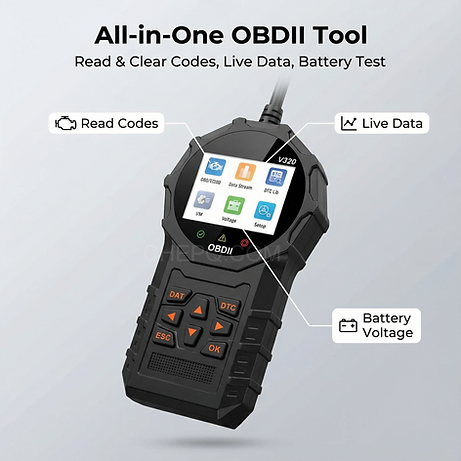
The framework of On-Board Diagnostics II and TPMS technology present substantial frequency discrepancies when evaluating implementations across Europe, East Asia, and the United States territory. In the USA, TPMS generally works on three hundred fifteen megahertz, whilst European systems generally use 433 MHz band. Asian markets, particularly PRC and Yamato territory, exhibit a wider spectrum of frequencies, covering both 315 MHz signal and 433 MHz frequency, occasionally with regional differences. This difficulty requests specialized diagnostic hardware and a thorough comprehension of local regulations to correctly troubleshoot and mend issues.
Battery Electric Vehicle Electric Automobile Battery-Powered Vehicle Scanners: Interpreting Examining Reviewing OBD2 and TPMS Data
As electrified vehicles become steadily growing, the required presence of specialized checking devices grows. EV equipment often provide the means to read and decrypt both vehicle diagnostic technology and Tire Pressure Monitoring System. Understanding this data helps vehicle specialists to establish errors with the transport’s charging network and affirm optimal tire air pressure for superior endurance and automobile functionality. Therefore, an EV scanner is an invaluable asset for various EV platform auto garage.
TPMS Sensor Frequencies: A Global Guide (Europe, North America, Asia)
Understanding vehicle pressure module (TPMS) unit spectrums is vital for trustworthy diagnostics and substitution. Globally, different territories employ separate frequency allocations. In North states, you'll typically encounter 315 MHz band and megahertz 433 waves. Europe utilizes a one-and-only 433 point ninety-two MHz waveband primarily, although some older systems tpms sensor frequency europe north america might transmit on different frequencies. Across Asia, the landscape is distinctly heterogeneous, with a combination of 315 MHz frequency, 433 MHz wave, and sometimes even lower band frequencies being deployed.
- North America: 315 megahertz & 433 MHz signal
- Europe: 433.92 MHz band (primarily)
- Asia: 315 MHz, 433 MHz signal, 300-350 MHz|mixed)
Deconstructing Powertrain Diagnostics : Exploring Pressure Control System Signal Shifts Planet-wide
The common vehicle testing system plays a key responsibility in measuring auto efficiency, and repeatedly incorporates pressure tracking metrics. However, tire monitoring signals change markedly among the globe . Particularly, American region runs a 315 megahertz frequency, while European Union generally runs on 433 MHz wave. Other countries, like Australasian region and Asian territories, are furnished with additional signals or mixes thereof, calling for dedicated evaluation machines for error-free inspection. Subsequently, mechanics and DIYers must understand these local variations to properly resolve pressure tracking concerns.
European bloc vs. US territory TPMS: Wave Portions Elucidated for Service Technicians
Understanding the disparate style to Tire Pressure Monitoring Systems spanning Europe and the USA territory is necessary for accurate assessment. Eurozone TPMS predominantly transmits on 433.92 MHz frequency, a dedicated frequency supervised by local directives. Alternatively, the America system uses a pair of wavelengths: MHz 315 transmission and 390 MHz signal. This bifurcation requires technicians to use broad-spectrum evaluation tools to correctly ascertain the auto’s TPMS unit and eliminate false positives. As a result, awareness with these radio divergences is imperative for effective TPMS operation.
Asian-Pacific Pressure Monitoring Controlling Transmitter Ranges and Car Diagnostics Connectivity
The APAC market for Pressure Control presents distinctive challenges related to sensor channels. Varying district-specific requirements often dictate which signal range is allowed to be used, leading to emerging nonconformance issues across transport vehicles. Furthermore, realizing seamless OBD-II compatibility is necessary for accurate data transfer and evaluation capabilities, demanding careful inspection during product planning and implementation. Creators are expected to emphasize ideas that address these complications to advance broad embracing throughout the locale.
Electric Automobile Testing: Specializing in OBD2 and Pressure Tracking in Electronically Powered Cars
Diagnosing modern electric automobiles presents particular challenges, requiring definite solid grasp of together with conventional and electric-exclusive diagnostic systems. While some familiar OBD2 outlet remains particular crucial access for reading fault alerts, their interpretation is capable of differ appreciably from gas-powered combustion engine autos. Furthermore, battery-driven landscape incorporates distinctive diagnostic considerations related to the management platform, motor regulators, and recharging infrastructure. Tire Pressure Monitoring Systems of Monitoring, correspondingly, introduce distinct diagnostic avenues given electrified vehicle’s implication on tire structure wear and fuel performance. Therefore, gaining skill in electric auto analysis is necessary for work mechanics to confirm ideal automobile efficiency and protection.
On-Board Scan Tools: Locating TPMS Sensor Frequencies (US, European Area, East Asia)
Modern OBD-II systems frequently deliver the power to recognize the precise signals radiated by tire safety systems receivers. This attribute is notably valuable for corrective flawed TPMS apparatuses. According to the area – US typically uses 315 MHz band or 433.92 MHz band, Eurozone generally employs four three three point nine two megahertz, and Asian countries is permitted to utilize various bands including three fifteen megahertz, 433.92 MHz spectrum, and even unusual outputs – the system will present this vital material to the technologist. Hence, dependable TPMS inspection is facilitated with adapted OBD2 monitoring equipment.
TPMS Troubleshooting: Frequency Challenges in Electric Vehicles Across Regions
Troubleshooting Tire Pressure Monitoring Systems amid Electric Vehicles creates a specific set of obstacles, particularly relating to radio frequency signal interference. The transition to EVs, with their rising use of electrical components, has produced a intricate landscape where TPMS signals can be usually affected. Regional variations in frequency ranges exacerbate these dilemmas. For exemplar, Europe uses four hundred thirty-three point ninety-two MHz, while North America employs megahertz 315 frequency – calling for careful analysis when resolving TPMS problems and guaranteeing proper signal getting. Furthermore, the spread of wireless electric supply systems within EVs themselves could add another layer of convolution to TPMS repair. Sorting out these frequency conflicts competently is paramount for preserving optimal EV efficiency.
- Analyze regional frequency regulations.
- Explore potential sources of radio jamming blockage.
- Apply diagnostic mechanisms capable of analyzing TPMS data.
- Authenticate TPMS receiver suitability with the specific EV {model|version|variant|type|configuration|edition|make|